
Himalayan Superfoods: Ancient Grains & Pulses Preserving Mountain Longevity (Gahat, Jhangora & Bhatt)
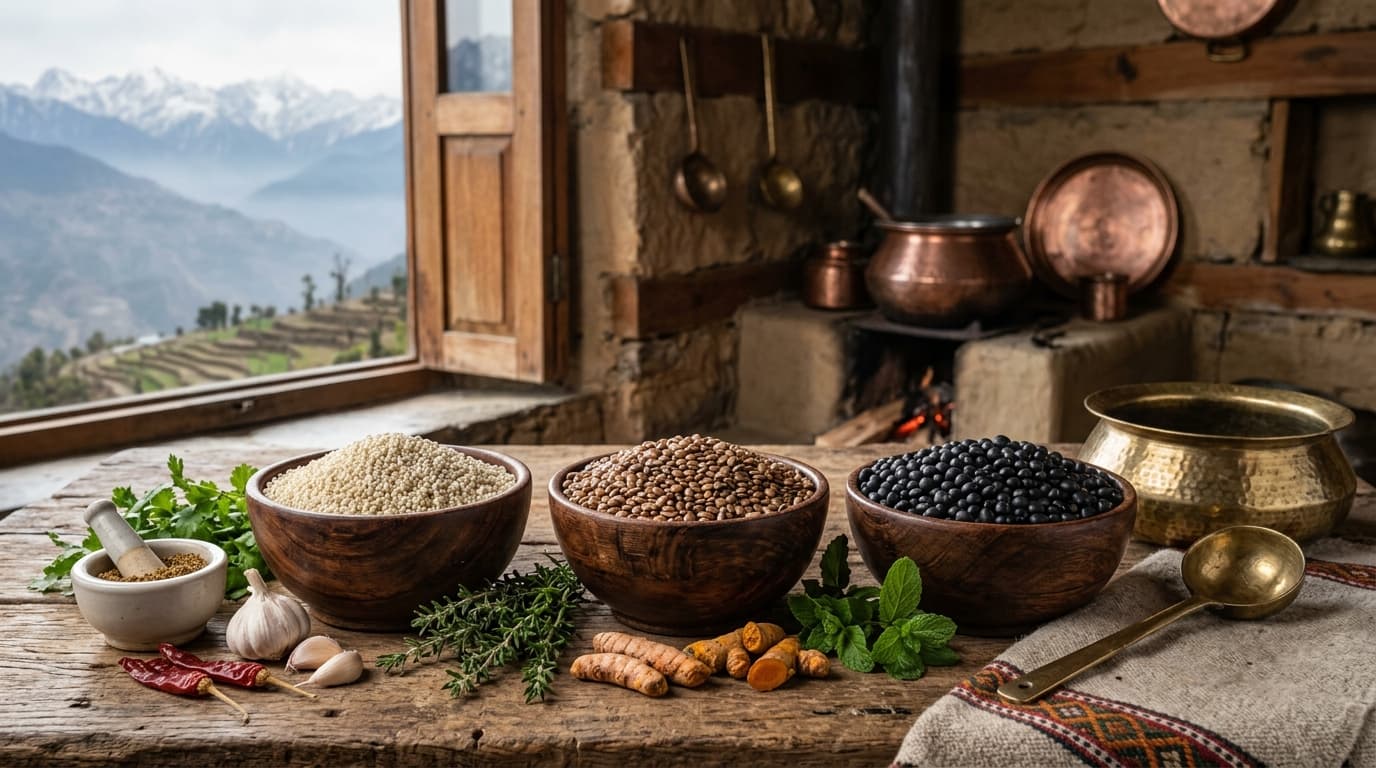
Table Of Content
- Himalayan Superfoods: Ancient Grains & Pulses Preserving Mountain Longevity
Himalayan Superfoods: Ancient Grains & Pulses Preserving Mountain Longevity
For generations, the high-altitude villages of Uttarakhand and Himachal Pradesh have relied on resilient crops capable of thriving in rugged terrain and extreme mountain climates. Long before modern wellness trends introduced quinoa, chia seeds, and acai berries, the elders of the Central Himalayas were thriving on nutrient-dense ancient grains and pulses nurtured by pristine mountain soil and glacial waters.
Today, as wellness seekers worldwide shift towards organic, climate-resilient, and nutrient-packed foods, the traditional staple crops of the Himalayas—Gahat (Horsegram), Jhangora (Barnyard Millet), and Bhatt (Black Soybean)—are emerging as global superfoods.
In this deep dive into Himalayan gastronomy and nutritional science, we explore why these traditional Pahadi superfoods hold the key to mountain longevity, their profound health benefits, and how you can prepare authentic recipes in your own kitchen.
1. Gahat (Horsegram): The Thermal Kidney-Stone Healer
Known scientifically as Macrotyloma uniflorum, Gahat (also called Kulthi or Horsegram) is perhaps the most revered pulse in Kumaon and Garhwal. Thriving in dry, terrace farms across the hills, Gahat is renowned for its intense thermogenic (body-warming) properties, making it an essential winter staple in mountain homes.
Health Benefits of Gahat
- Natural Remedy for Kidney Stones: Gahat contains high concentrations of polyphenols and antioxidants that help dissolve calcium oxalate crystals, making it a natural preventative dietary choice for kidney health.
- Diabetes Management: Rich in slow-digesting complex carbohydrates and dietary fiber, Gahat has a extremely low glycemic index (GI), preventing post-meal blood sugar spikes.
- Weight Loss & Digestion: Packed with high protein content and essential amino acids, Gahat keeps you satiated for hours while aiding fat metabolism.
Traditional Recipe: Pahadi Gahat ki Dal (Soup)
A comforting, aromatic soup simmered in an iron pot (Kadhai) with local herbs like Jakhya (wild mustard seed) and Gandhraini (angelica root powder).
Ingredients:
- 1 cup Gahat dal (soaked overnight)
- 1 tsp Jakhya seeds
- A pinch of Gandhraini or Asafoetida (Hing)
- 2 cloves of garlic, crushed
- 1 dry red chili
- Ghee, salt, and turmeric to taste
Method:
- Pressure cook the soaked Gahat dal until soft and tender.
- In a heavy iron kadhai, heat cow ghee and add Jakhya seeds, dry red chili, and crushed garlic until golden brown.
- Pour the cooked dal into the iron kadhai, allowing it to simmer for 15 minutes. The iron pot reacts mildly with the dal's natural acids, giving it a rich dark hue and boosting bioavailable iron content!
2. Jhangora (Barnyard Millet): The Golden Gluten-Free Millet
Before rice became widely accessible across mountain routes, Jhangora (Echinochloa frumentacea) was the primary carbohydrate source for Pahadi families. Grown on steep terrace fields, Jhangora requires minimal water and zero chemical fertilizers, standing as a model for climate-resilient organic agriculture.
Nutritional Profile & Benefits
- Gluten-Free Powerhouse: Naturally 100% gluten-free and easy on the digestive tract.
- High Iron & Calcium: Contains nearly 6x the iron content of standard white rice, making it exceptional for combatting anemia.
- Low Glycemic Index: Ideal for individuals managing Type 2 diabetes or metabolic health.
Popular Preparation: Jhangora ki Kheer
A luxurious yet healthy dessert made by simmering Jhangora millet in full-cream milk, sweetened with organic jaggery (Gud) and flavored with cardamom, saffron, and mountain nuts.
3. Bhatt (Black Soybean): The Antioxidant Champion of Kumaon
Unlike commercial yellow soybeans, Bhatt (Glycine max) is an indigenous black soybean variety unique to the high altitudes of Kumaon and Garhwal. Its deep black seed coat is dense in anthocyanins—the same powerful antioxidants found in blueberries and acai.
Health & Wellness Highlights
- High Plant-Based Protein: Delivers over 36g of bioavailable protein per 100g serving.
- Heart Health: Packed with omega-3 fatty acids and plant sterols that help lower LDL cholesterol levels.
- Immunity Booster: Rich in zinc, copper, and essential micronutrients.
Iconic Recipe: Bhatt ki Churkani
No trip to Uttarakhand is complete without tasting Bhatt ki Churkani—a fragrant, gravy-based dish where black soybeans are dry-roasted in ghee, coated in whole wheat flour paste (Biswar), and slow-cooked in an iron vessel until velvety dark and intensely savory.
Sustainable Farming & Supporting Local Farmers
As young generations migrate to cities, ancient terraced fields risk abandonment. By choosing authentic Pahadi produce, you directly support small-holder women farmers and indigenous agricultural cooperatives across the Himalayas.
At Buransh Tales, we are committed to bridging the gap between traditional mountain farmers and conscious consumers worldwide. Through our vendor programs, every purchase empowers traditional farming communities while protecting biodiversity.
Frequently Asked Questions (FAQs)
Q1. Are Gahat and Jhangora suitable for daily consumption?
Yes! Both Gahat and Jhangora are clean, whole-grain staples. However, because Gahat is highly thermogenic (body-warming), mountain elders recommend consuming it during winter, autumn, or rainy months.
Q2. Can Jhangora replace rice in modern diets?
Absolutely. Jhangora cooks in under 12 minutes and can be used in place of rice for daily meals, biryanis, khichdi, or breakfast porridge.
Q3. Where can I buy authentic Pahadi grains?
You can source organic, hand-harvested Gahat, Jhangora, and Bhatt directly through verified Himalayan artisan cooperatives and local vendors featured on the Buransh Tales Marketplace.
Preserving mountain wisdom, one harvest at a time. Share this article with fellow health enthusiasts and explore more stories on Himalayan lifestyle at Buransh Tales.