
himalayan-flora
Kafal: The Himalayan Berry That Tastes Like Childhood
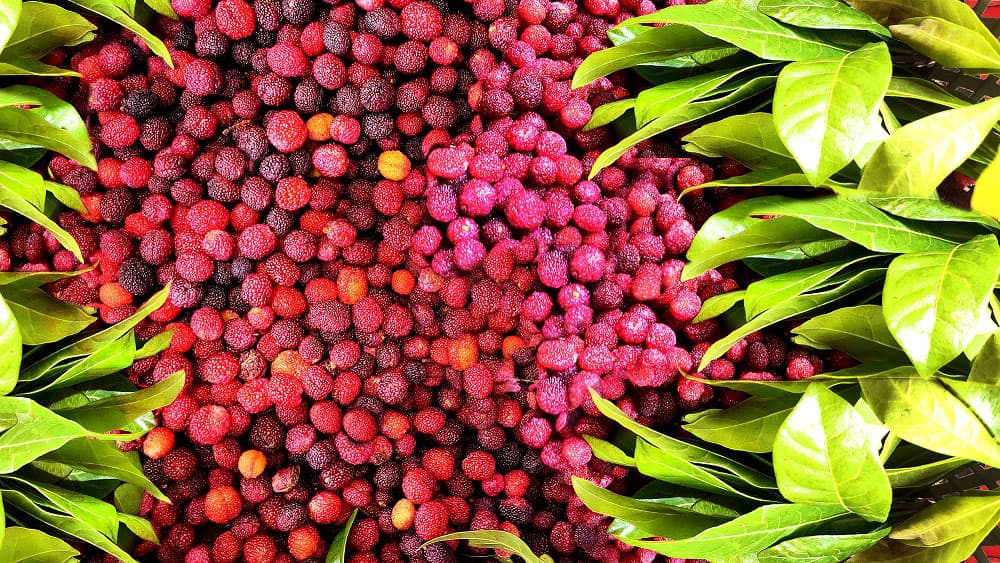

To taste काफल (Kafal) is to taste the Himalayas themselves—a burst of tangy-sweet flavor with a waxy crunch, evoking memories of children scrambling up oak trees during summer vacations in Kumaon and Garhwal.
The Science Behind the Magic
Taxonomy & Ecology
- Scientific Name: Myrica esculenta
- Family: Myricaceae (Bayberry family)
- Altitude: 1,500–2,400 meters
- Pollinators: Himalayan honeybees (Apis cerana himalaya)
- Fruiting Season: May–June (Earlier by 2 weeks since 1990s)

Cultural Significance
1. Folklore & Proverbs
"काफल पाको, डाको मैना;
खाए दाना, छोड़े चैना"
(When Kafal ripens, the mynah calls;
Eats the fruit, leaves the seed)
- Believed to be Parvati’s favorite berry—offered at many hill temples during festivals.
- Kafal Pakora: A monsoon delicacy where berries are dipped in besan and fried.
2. Traditional Uses
| Use Case | Method | Region |
|---|---|---|
| Chutney | Crushed with mint & jaggery | Almora |
| Medicinal | Bark tea for dysentery | Pithoragarh |
| Dye | Skin-staining for festivals | Bageshwar |

Where to Find Kafal
Best Harvesting Spots
-
Jageshwar Forests (Near Almora)
- GPS Coordinates: 29.639°N, 79.588°E
- Tip: Look for trees near ancient Shiva temples.
-
Munsiyari’s Tribal Trails
- Guided Tours: Local homestays offer berry-picking hikes in June.
-
Pindari Glacier Foothills
- Unique Trait: Berries here have thicker wax due to cold winds.

Why Kafal is Vanishing
Threats & Data
| Threat | Impact | Solution |
|---|---|---|
| Deforestation | 30% habitat loss since 2000 | Community-led oak nurseries |
| Climate Shift | Early fruiting → bird mismatch | Phenology tracking apps |
| Overharvesting | Bark stripped for medicine | Sustainable harvesting workshops |
Did You Know?
Kafal seeds need to pass through a bird’s gut to germinate—fewer mynah birds mean fewer new trees.